E20 and after: what India’s blending roadmap means for distilleries
With twenty per cent blending reached years ahead of the original 2030 date, the question for the industry has shifted from "can we supply?" to "what comes next?"
Fuel. Feedstock. Facts.
India’s ethanol industry, explained.
With twenty per cent blending reached years ahead of the original 2030 date, the question for the industry has shifted from "can we supply?" to "what comes next?"
Fuel ethanol is not sold at a single market price. What a distillery receives depends on the feedstock it used.
The same tonne of cane can yield very different volumes of ethanol depending on where in the sugar process the stream is diverted.

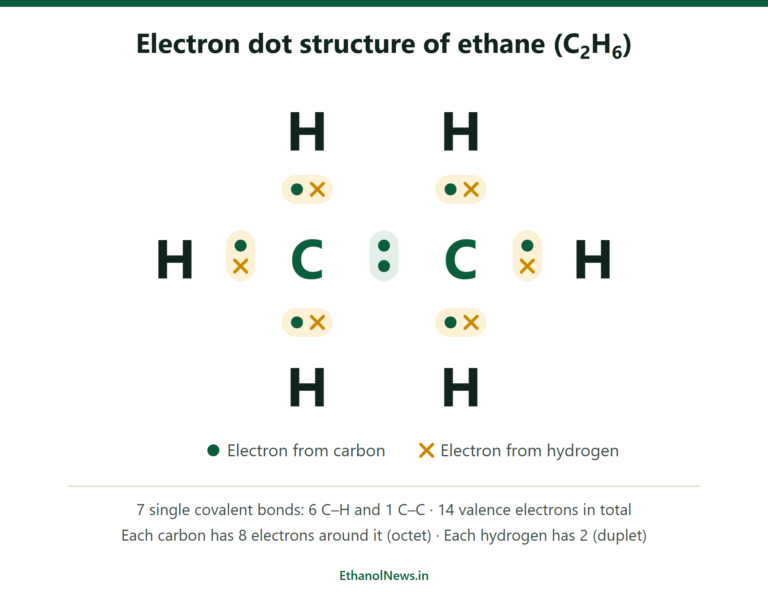
Ethanol is one of the most widely used organic chemical compounds in the chemical, pharmaceutical, fuel and alcohol industries. It is also an important topic in chemistry education because its molecular structure provides a simple example of covalent bonding between carbon, hydrogen and oxygen atoms. Understanding the electron dot structure of ethanol helps students learn […]
Chemistry sets a hard ceiling on how much alcohol sugar can give. The gap between that ceiling and the plant’s actual figure is where money is made or lost.
Brazil’s ethanol programme began as a response to an oil shock. It became the world’s most complete example of a biofuel economy.
Excise registers, tank dips and invoices all speak slightly different languages. Here is how bulk litres, alcohol litres and proof litres relate.
Blending targets have been met. Keeping them met, year after year and monsoon after monsoon, is a different kind of problem.

A simple yield estimate can help put production readings in context, but only when stream volume, alcohol concentration, and feedstock mass share a clear basis.

A policy headline is not yet an operating instruction. Here’s how to trace what changed, who it applies to, and which plant records may need a closer look.
Ethanol density is an important physical property used in the alcohol, distillery, pharmaceutical, chemical, fuel and beverage industries. It helps determine the relationship between the mass and volume of ethanol and plays an important role in quality control, laboratory testing, storage, transportation and commercial transactions. Whether you are working with Extra Neutral Alcohol (ENA), Rectified […]