
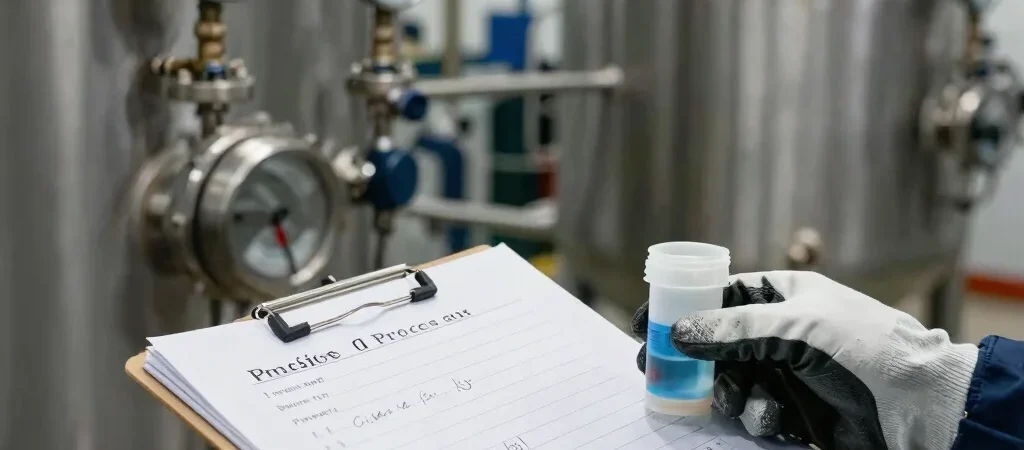
A shift in fermentation temperature, mash solids, enzyme addition, or distillation conditions can show up in a daily report before anyone knows what caused it. The useful question is not simply whether a result moved, but whether the comparison accounts for the conditions the process was running under.
Record the Starting Conditions
Before assessing a process update, establish a baseline from comparable runs. Record the relevant feedstock characteristics, operating settings, measurement methods, and time window alongside the production result; otherwise, a change in incoming material or sampling practice may be mistaken for an effect of the update.
Keep the comparison aligned by batch or by a clearly defined operating period. For example, comparing a fermentation result with a distillation output from a different period can obscure the relationship because production and inventory do not necessarily line up at the same moment.
Separate Signal From Noise
Use the same units and measurement basis before comparing results, and note any missing or estimated inputs. If several settings changed together, the record may show that the overall operating picture changed, but it will not by itself identify which adjustment caused the difference.
A process update is most useful when the operator can see what changed and why it matters on the plant floor. Keep the baseline, assumptions, and approved procedure together, then review the comparison with the people responsible for the process before treating an observed difference as a reason to change routine practice.